

THANK YOU FOR SUBSCRIBING
A featured contribution from Leadership Perspectives: a curated forum reserved for leaders nominated by our subscribers and vetted by our Manufacturing Technology Insights Advisory Board.


Digitalization in the tire and rubber industry is promoting innovation in product features. New entrants in the e-mobility and e-cycle spaces are speedingadoption rates of new features. They are often open to product innovation. This accelerates return on investment. The entire value chain can enjoy benefits from new automated processes that are easily added to existing production.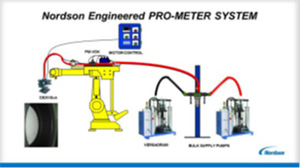
The automated application of a highly viscous self-sealing compound is an excellent example. A robotic work cell for this process integrates easily into existing production lines.A layer of material is automatically applied to coat the inside of the tire to prevent air leakage if something pierces or punctures the tire.The automation supports the full range of product sizes and formats. The application typically requires 60-90 seconds. It seamlessly integrates into the other processes on the line.
“Self-sealing tires offer lighter weight and better handling than other run-flat technologies.”
Self-sealing tires offer lighter weight and better handling than other run-flat technologies. These technologies includesupport rings and self-supporting reinforced tires. Self-sealing tires do not need special mounting equipment. The sealant layers are only about 5mm thick, so the performance is nearly identical to the end-user. Since the sealant maintains the air pressure, the consumer continues their journey uninterrupted. The technology doesn't have strict speed and distance limits like other run-flat technology. In this sense, the technology isn’t technically run-flat but rather is flat-preventing. The technology is reliable enough that vehicle manufacturers can save the weight and cost of a standard spare tire.This supports fuel savings and green messaging. Two-wheeled and compact vehicles that don't have a spare gain from the technology. Self-sealing is typically less expensive than other run-flat technologies due to its simplicity.

Manufacturing Technology Insights Weekly Brief
Be first to read the latest tech news, Industry Leader's Insights, and CIO interviews of medium and large enterprises exclusively from Manufacturing Technology Insights
